In the Liminal: A Leadership Riff

There are seasons when the music fades and all that’s left is the echo. You find yourself standing in the hallway between what was and what’s next. The applause has stopped. The setlist is blank. It can feel lonely, alienating, and rough. Yet this space, the liminal, often carries the quiet rhythm of our becoming.

Every artist and every leader eventually enters this space. It’s not failure. It’s the necessary silence before the next riff.

The Sound of the In-Between

David Bowie once walked away from his own fame. After Ziggy Stardust, he felt trapped inside the glitter and noise. He moved to Berlin, stripped his sound to its essence, and created Low and “Heroes.” Those albums didn’t just reinvent his music; they reinvented him. Bowie found clarity in exile.

Bruce Springsteen did the same when he recorded Nebraska. Alone with a cassette recorder, he traded stadium lights for solitude. Those stark songs revealed a deeper truth: sometimes the loudest growth happens in quiet rooms.

Aretha Franklin’s Amazing Grace marked her own liminal awakening. She paused the pop spotlight to sing from her foundation. By returning to the gospel roots that first shaped her voice, she reminded the world and herself where her power began.

Johnny Cash, long written off by the industry as an oldies act, found redemption through American Recordings. One man, one guitar, one truth. The stripped-down sound of renewal.

Paul Simon, after heartbreak and creative uncertainty, traveled the world and discovered Graceland, an album that is proof that curiosity and collaboration can pull us from the shadows into new light.

Each of them faced an in-between. Each emerged with something truer, deeper, and more human.

The Leadership Riff

Leadership has its own liminal moments. The band breaks up. The stage lights dim. We’re left wondering if what we created mattered at all. It’s tempting to see these stretches as endings, but they are often tuning sessions. These are times to recalibrate, rediscover, and ready ourselves for the next song.

These moments test us. They strip away the applause and ask, Who are you when no one’s listening? They demand honesty and patience. They can feel endless. Yet this is where the next riff takes shape.

A leadership riff is born in those quiet intervals when we listen more closely to the rhythm beneath the noise. It’s the small act of courage to keep playing, even when the room is empty.

The Stage Beyond the Silence

Growth is rarely glamorous. It’s often silent, slow, and unseen. But it’s in those moments when we are not center stage that our next chapter quietly tunes itself.

Like Bowie, we learn reinvention.
Like Springsteen, we rediscover simplicity.
Like Aretha, we return to our roots.
Like Cash, we reclaim authenticity.
Like Simon, we find new rhythms in unexpected places.

The liminal isn’t the end of the concert. It’s the soundcheck for the encore.

So if you’re in that hallway right now feeling unsure, unseen, and waiting for direction trust that the next song is coming. This is the space where your voice deepens, your purpose sharpens, and your leadership takes on a new sound.

Keep playing. The world will hear you in time.


Author’s Note

This reflection is part of the evolving ideas that will shape my next book, Leadership Riffs: Harmonizing Inspiration, Innovation, and Impact. It’s about the music that plays in the background of leadership: the improvisation, the courage, and the faith to keep going when the crowd goes quiet.

🎧 Follow more reflections and episodes at seangaillard.com.
When Authenticity Is Enough: Leading With Truth & Soul

A couple of weeks ago, I had another health scare. My blood pressure spiked, and I ended up in the hospital. I am better now, but those hours of quiet reflection reminded me of something I can’t overlook anymore. I had lost my balance, and it caught up with me.

What surfaced most clearly in that hospital room was this truth: I have to lead as my authentic self. Every time I have tried to wear the mask of someone else’s idea of leadership, I’ve paid the price. The expectations, the performances, the comparisons; none of it leads to joy. Authenticity does. The words of my dear father resonated in my mind as I was facing my internal valley of doubts, “Hold your head high, like I taught you.” My father is my icon for what it means to be an authentic leader. He sees the best in others, guides his moves with faith, and motivates others to get off the proverbial bench because as he says, “Everyone plays. Everyone is a starter. Let’s dare to be great!”

Autenticity is the pathway to joy and the ignition us to be our very best selves for others.

And I am reminded daily that joy comes in the smallest of places. The other morning, I was standing in the cafeteria line talking with kids over breakfast. One challenged me to a game of rock paper scissors. In that small moment of laughter and connection, I found energy again. These little moments are not little. They are everything.

That’s why Bruce Springsteen’s Nebraska has been on my turntable again. A stripped-down, raw, uncompromising record. Just voice, guitar, and truth. The industry didn’t expect it, but Springsteen didn’t compromise. He stayed true to the vision he knew he had to share. And now, with the upcoming film based on the creation of Nebraska, Deliver Me From Nowhere on the horizon, it feels validating to see that choice recognized for the powerful act it was.

Every leader has their own version of Nebraska, a stripped-down truth that others may ignore, dismiss, or even resist. The challenge is to hold on to it, to trust it, and to keep leading from it. Authentic leadership rarely comes with applause or bright lights. It is often quiet work, anchored in conviction and presence. It is about refusing to dilute your vision simply because it doesn’t match someone else’s script.

We see examples of this courage throughout history. Rosa Parks chose quiet defiance over spectacle, and her authenticity shifted the course of a nation. Nelson Mandela held to his convictions through decades of imprisonment and emerged stronger, not broken. I think of the times in my leadership where my authenticity help to guide me to embrace the impossible even when naysayers attempted to dispel what I could bring to the table.

Even in our time, I see inspiring friends like Lauren Kaufman and Meghan Lawson modeling this kind of authentic leadership in their blogs. Their writing resonates because it comes from a place of truth, not performance. Their voices remind me that leadership grounded in honesty has the power to connect, inspire, and endure.

Your Nebraska may not look like anyone else’s. It may not be understood at first. It may even be pushed aside. But if you stay with it, if you let your truth guide your steps, it can become the defining force of your leadership. And in the end, authenticity is not only enough, it is everything.


Four Takeaways for Leaders

  1. Authenticity sustains: Don’t chase someone else’s version of leadership. Stay rooted in who you are.
  2. Small moments matter: A quick conversation or shared laugh can carry more impact than a staged performance.
  3. Comparison drains, presence restores: Shift your focus from how you measure up to where you are needed most.
  4. Find your Nebraska: Hold on to your stripped-down truth, even when it’s overlooked. That is where your real strength lives.

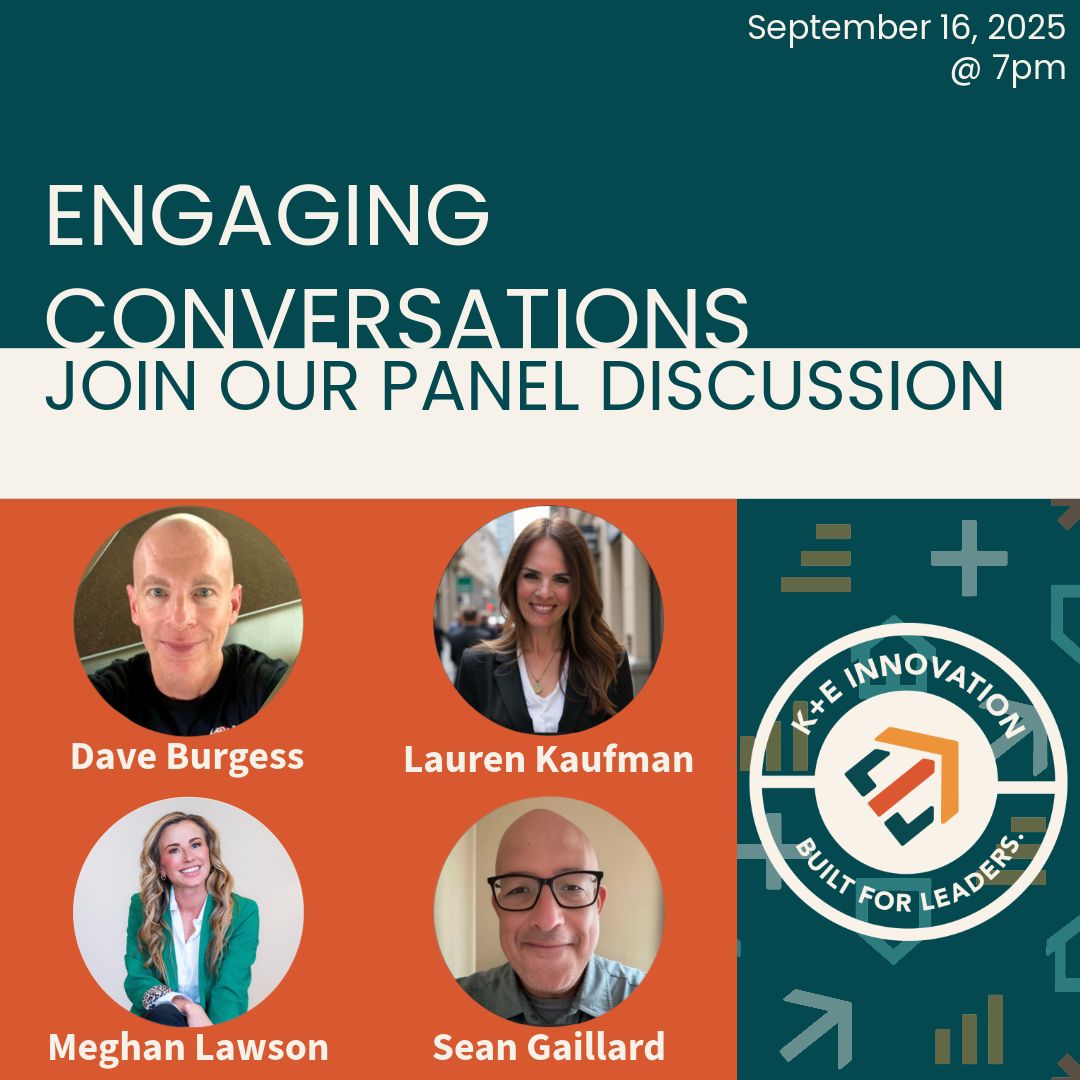
I am honored to be part of the Courageous Leadership Panel, a free webinar sponsored by K + E Innovation with Lauren Kaufman, Meghan Lawson, and Dave Burgess on September 16, 2025 at 7:00 p.m. Eastern. RSVP for this dynamic conversation here: https://lnkd.in/g6SswcTm

Keep Playing, Even If No One Is Listening

There’s something powerful about picking up the guitar, writing the words, and hitting record—even when it feels like no one is tuning in. The greatest artists, thinkers, and change-makers didn’t wait for an audience before they started creating. They played. They wrote. They spoke. They persevered against the silence.

Paul McCartney recorded McCartney alone, layering every instrument himself. Bruce Springsteen stripped it all down and put out Nebraska, unsure if anyone would connect with its raw vulnerability. Nick Drake’s Pink Moon was met with quiet indifference at first, only to become a masterpiece embraced long after he was gone. These albums weren’t made for applause; they were made because the artist had to create.

The same applies to you. Your words, your leadership, your creativity—it all matters, even if it feels like no one is paying attention. Keep writing the blog. Keep crafting the lesson. Keep showing up for your students and colleagues. Someone, somewhere, will be moved by your work when they need it most.

The silence isn’t a signal to stop. It’s an invitation to keep going. #LeadershipRiffs

The Art of Going Solo: Why Leaders Need Time Alone


As I stood in line at Barnes & Noble with a couple of new books under my arm, I was feeling deflated. A recent collaborative project I had spearheaded hadn’t gone as planned. My vision for what it could become was met with challenges and miscommunications—mistakes I take full responsibility for. I found myself yearning for the comfort of a bookstore, a sanctuary where I could immerse in words and ideas, hoping to reset my mindset.

While browsing, the headline of a recent Harvard Business Review article caught my eye: “We’re Still Lonely at Work.” It stopped me in my tracks. Loneliness is an epidemic many of us grapple with, whether we’re school leaders, teachers, or district administrators. The piece reminded me of the isolation that can creep in, even when surrounded by people. As leaders, we often navigate a delicate balance between fostering connection and feeling adrift in our own roles.

The Myth of Constant Collaboration

In our line of work, there is a pervasive myth: that the most effective leaders are always collaborating. We’re encouraged to find our “bandmates,” to build a culture of teamwork and shared vision. And while this is crucial, it’s equally important to recognize when it’s time to take a step back and find our creative solitude.

I’ve had the privilege of being part of incredible collaborations, whether it’s through projects like my podcasts, #PrincipalLinerNotes and #HopeAmplified, or through dynamic partnerships in our school’s Professional Learning Network (PLN). Yet, I’ve also experienced the sting of collaborations gone awry—those moments when trust is broken or communication falters. I’ve had ideas co-opted, projects I thought I’d be part of move forward without me, and connections that simply fizzled out. There was the time I thought I was co-writing a book with someone, only to find out they decided to go ahead without me. Or the time I drafted a conference proposal for a co-presentation with a colleague, only to learn they chose not to include me and took the idea to someone else. These setbacks can feel personal, prompting deep reflection on my own role and contributions.

When those moments happen, I retreat into my own creative space. I turn to music and the stories of artists who dared to go solo, forging their own paths when the band wasn’t quite the right fit anymore.

Solo Albums as Metaphors for Leadership

Paul McCartney’s McCartney, Bruce Springsteen’s Nebraska, and Nick Drake’s Pink Moon all come to mind. Each album is a testament to the power of going it alone. McCartney, grappling with the breakup of The Beatles, recorded his first solo album at home. It’s raw, intimate, and features a vulnerability that inspires me. Bruce Springsteen’s Nebraska began as a set of demos intended for the E-Street Band. But when the full band recordings didn’t capture the raw emotion of the demos, Springsteen made a bold decision: he released the demos as the album. It’s a haunting, spare record that wouldn’t be the same with a full band.

Joni Mitchell’s Clouds is another beautiful example of solo expression. On this album, Mitchell showcases her introspective songwriting with just her voice and guitar for much of the record. It’s a deeply personal work that highlights the power of stripping back the layers and letting the essence of the music shine through.

Keith Jarrett’s The Köln Concert is a masterclass in solo creativity. This entirely improvised piano performance captures the raw beauty of an artist fully immersed in their own expression. It’s a reminder of the magic that can happen when we trust ourselves enough to follow our instincts, even without a plan.

These albums remind me that sometimes, we need to embrace our own creative solitude. It’s okay to be a solo act. In fact, it can be essential for recharging our spirits and clarifying our vision as leaders.

Gratitude for Collaborative Partners

As much as I value these solo pursuits, I am equally grateful for the collaborative partners who have taken a chance on me and embraced the spirit of shared creation. I owe a deep sense of gratitude to the few incredible educators who have been true bandmates on this journey. They’ve shown me the power of trust, shared vision, and authentic connection. Their willingness to join forces has renewed my belief in the possibilities of collaboration and reminded me of the joy that comes from making music together.

Four Ways Leaders Can Embrace Solo Creativity

Here are four actionable steps for leaders to carve out solo time and tap into their own creative wellspring:

  1. Write It Out: Start a blog, write a journal entry, or even pen a letter to your future self. Writing is a powerful tool for reflection and can help you process your thoughts and emotions. It’s your own form of “audio journaling,” much like Springsteen’s Nebraska.
  2. Record a Podcast Episode: If you’re feeling inspired, create a solo podcast episode. It doesn’t have to be perfect—just hit record and share your thoughts. This process can be cathartic and help you find your voice, much like McCartney did on his solo debut.
  3. Go for a Solo Walk or Run: Physical exercise can clear your mind and offer a fresh perspective. Leave the headphones at home and listen to the rhythm of your own thoughts. It’s a form of active meditation that can spark new ideas. Outdoor space is good for inspiration and introspection. You can even take Joni Mitchell’s album, “Clouds” with you on a solitary walk.
  4. Create an Art Piece: Whether it’s painting, drawing, or playing an instrument, creating something with your hands can be a wonderful way to express yourself. Like Keith Jarrett’s improvisations, let it be unstructured and free-form. See what emerges when you follow your instincts.

Conclusion: Finding Hope in Solitude and Connection

Leadership is about fostering a sense of belonging and connection for the people we serve, but it starts with us. It starts with acknowledging the times when we need to go solo, to reflect and create on our own terms. By stepping away from the noise of constant collaboration, we strengthen our ability to be present and authentic in our partnerships. We need both the band and the solo album to thrive.

As you reflect on your leadership journey, I encourage you to find your own version of “Walden Pond.” (Thoreau’s Cabin is pictured in the blog graphic for a reason.) Seek out those moments of quiet solitude to recharge your creative energy. It’s in these moments that we build the core of who we are as leaders. By doing so, we can return to our collaborations with renewed clarity, a sense of purpose, and the resolve to foster true connection and belonging.

Let’s embrace our solo efforts, find hope in our quiet moments, and continue building a sense of community for the bandmates who share this leadership journey with us. The interlude into solo pursuits can serve as the antidote for combatting work loneliness and inviting others into the band.