A Year Saved: Trending the Positive with an Earthrise and Carpool Karaoke

“Thank you, Apollo 8. You saved 1968.”

Astronaut Frank Borman, eyewitness to a pivotal moment in human history, eternally etched in his memory the words of this statement from a telegram.

Borman along with the other members of the Apollo 8 Crew: Jim Lovell and Bill Anders helped to briefly pause the tumult that was greeting Year 1968. This particular team of astronauts were engaged in the project to place the first human being afoot on the Moon. The Apollo 8 Mission was designed to place astronauts for the first time on a journey from the Earth to the Moon. In essence, Apollo 8 was to set the stage for the first Moon Landing that was to follow in July 1969.

The journey of Apollo 8 served as a positive bookend to a year marred with assassination, war and unrest. Ten years after the odyssey of Apollo 8, I remember as a young boy watching an ABC News documentary commemorating the impact of that year entitled “1968: A Crack in Time.” I was eight years old and I always had a love for history that was shaped by the warm world of periodicals like “Junior Scholastic” or the Saturday Morning Television Joy of “Schoolhouse Rock.” Here, I was watching a prime-time documentary filtered with news footage capturing images of the assassinations of Martin Luther King and Robert Kennedy. I watched images of war transmit from a place called Vietnam. There was anger in the streets of my parents’ hometown of Chicago.  Later, I remember asking my mother what it was like to live during such a year of social and political unrest. Mom simply said, “I thought the world was going to end.”

What I don’t remember seeing from that stark documentary is anything pertaining to the inspirational journey of Apollo 8. It may be that I had to go to bed or my parents discovered that I was being exposed to some pretty harsh imagery. My guess is that they would have enjoyed watching footage with me of the Apollo 8 Crew reading from Genesis on Christmas Eve 1968 aboard their spaceship orbiting the Moon.

I can only imagine the collective universal breath that humanity took in 1968 as they witnessed through the eyes of Borman, Lovell and Anders the vision of Planet Earth rising over the Moon. Human Beings had never traveled this cosmic distance and the achievement must have brought us closer together amidst the storm and stress of 1968. Seeing the image still stirs the imagination. Gazing at our global neighborhood adrift in the vastness of space, one sees a world without borders, strife and bloodshed.

297755main_GPN-2001-000009_full.jpg

“Earthrise” from Apollo 8 (www.nasa.gov)

The words of the telegram Astronaut Frank Borman echoed for me as I experienced “Carpool Karaoke” earlier this summer.

The comedic bit on “The Late Late Show with James Corden” has always trended and placed collective smiles around water coolers and Facebook posts. The premise is achingly simple and blissful: Host James Corden literally drives around in a car with a group of celebrity guests singing songs. There may be a famous musician or two gleefully singing with an unabashed James Corden several hits. “Carpool Karaoke” Passengers have included Michelle Obama, Lin-Manuel Miranda, Stevie Wonder and Elton John.

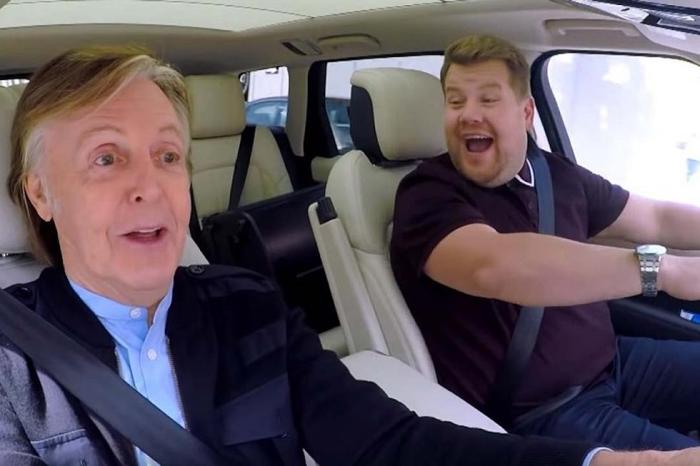
An epic pairing took place when Paul McCartney rode shotgun with James Corden for a recent episode of “Carpool Karaoke.” It was Paul’s first adventure with James. What was unique about this episode is that it took place in Paul’s hometown of Liverpool. Upon first glance, I am sure Corden and the producers sketched out an outline for the episode involving Paul McCartney revisiting his Beatle classic hits coupled with new songs from his upcoming album. I am sure there was excitement about the arrangement to have Paul visit old haunts and chance upon the actual street namesake for “Penny Lane.” My guess is that the original plan to secure a music icon did not include the cultural phenomenon that would follow. Then again, Paul McCartney as a Beatle and Solo Artist is accustomed to making a visceral global impact.

Corden and McCartney provided the expected comedic bits and sing along flavor of “Carpool Karaoke.” The Beatle Fan in James Corden probably couldn’t pass up the once-in-a lifetime opportunity to sing “Drive My Car” with Paul McCartney in tow. Walking side by side with the man responsible for composing “Penny Lane” on the actual strip was priceless. As segment progresses, a certain transcendence occurs taking us into private glimpse of two men connected by the love of music.

Our journey takes a three-fold path during this segment. An emotional triptych transpires for us as the observers into this manifestation of our humanity. First, we experience Paul McCartney walking in his boyhood home, now an official British landmark. He is taking us on a journey into his humanity. Here is an icon who has spun memories into the soundtrack of our lives for over fifty years and we see him lovingly gaze upon his living room thinking of his father providing feedback during the composition of The Beatles hit, “She Loves You.”

Another second emotional highlight is James Corden learning the origin of “Let It Be” from Paul McCartney. The song invokes “Mother Mary” who is a reference to Paul’s own mother who passed away from cancer when he was a teenager. His mother made an appearance to Paul during a time of strife with The Beatles disintegrating as a band. She simply advised him to “Let It Be.” Paul and James then belt out “Let It Be” with such vigor and song is reborn for those who were unaware of the song’s origin. Corden builds upon the moment wishing that his deceased grandfather, who had introduced him the music of The Beatles, was present in the moment for the conversation with a Beatle. Paul simply states that Corden’s grandfather’s is indeed with them.

The part of the emotional triptych is the surprise concert McCartney performs at a local Liverpudlian pub. Patrons are completely blissful at the fact that hometown hero, former Beatle and music icon is getting back to his roots for them. The response is visceral and identifiable as the impromptu audience stands on their feet in time to songs such as “A Hard Day’s Night” and “Love Me Do.” The evident joy on the faces of those patrons is contagious.

In the midst of this karaoke journey, one finds a sense of being a willing passenger in the joyride of Corden and McCartney. You can almost feel the happy electricit being in the car joining in what Paul cites as “…the power of Music.”

Music is our universal language that keeps us treading on common ground in the human experience. Regardless of political affiliation, aligned border or professed belief, Music transcends barriers and always serves as a loving bond in our humanity.

A whimsical jaunt between a British Comedian and Pop Music Composer serves as a salve in the sharp and constant melee of 2018. This particular year has been marred with the top-heaviness of 21st Century tumult and tribulation. Headlines abound with negativity wrapped in global uncertainty, political shrapnel and natural unrest. Check any social media channel for a harsh personal attack that at any given time. Channel surf along any form of news program and it is bound to lead down a road of negative and uncivil discourse. Violence is our constant companion. Negativity stands tall amidst the rubble.

Although the years of 1968 and 2018 have different layers of historical marrow in which they resonate, there are parallels in the level of global unrest. The elements of the Apollo 8 Moon Mission and Carpool Karaoke serve as cultural rest stop in our human journey. These cultural rest stops serve as reminders for us in the chaos that our world is still a positive and joyful place. Taking pause to witness the Earth rise in outer space or sharing in the divine connection that can be discovered in a Beatles song, unexpected gifts of the love inherent in our humanity are experienced.

Hopefully, these cultural moments will also serve as catalysts for other events which illuminate that there are always positive possibilities in our human experience. Tuning into the positive provides us insight into “…the better angels of our nature.” Furthermore by sharing and proclaiming those positives, we do find a connectedness that outpaces the plague of the negativity.

Skimming the pages of 1968 and 2018, we can discover other positive moments. Imagine the sunlight dancing on the faces of a group of boys in Thailand. They have been trapped in a cave for days without much solace. A diverse crew of grown-ups gathered their gifts of courage on a perilous journey of rescue as our world held their collective breath wishing for their safety.

In 1968,  a young bass player is driving out to visit the soon-to-be ex-wife of his best friend. He wants to comfort their five-year old son who may not be able to cope with the understanding of divorce. The bass player is humming an impromptu song for the boy. Little does the bassist know that this song will evolve into a universal anthem of hope entitled “Hey Jude.” Also, unbeknownst to Paul McCartney in 1968 that his song written for his friend’s son would serve as a source of jubilation for the patrons at a local pub in Liverpool during an episode of “Carpool Karaoke.”

A song that would serve as a joyful rest stop for 130 million people upon first view on Facebook and YouTube.

Thank you, Paul and James. You saved 2018.

Click HERE for the epic episode of “Carpool Karoke.”
Paul-McCartney-Carpool-Karaoke-YouTube


One Beat, One Spark

There is a wonderfully poignant scene in Ron Howard’s documentary on The Beatles entitled “Eight Days a Week.” Paul McCartney is sharing the first time all four members of the band played together. As McCartney recalls the first time they played together as a a unit, he calls it an “Oh, My God Moment.” He describes the moment from when Ringo kicks in with the drums and the band almost stops mid-song. All four members share an acknowledging telepathic look which Paul translates to, “Yeah, this is it.”

As Paul shares this anecdote in the documentary, tears well up in his eyes. It is indeed a powerful moment. Seeing Paul’s revelation of the emotional weight of this life-changing moment is intimate and revelatory. In most Beatle interviews I have observed the band downplaying their impact and adulation. Occasionally, the former members of the band will let their guard down in interviews and reveal a very human moment shared.

Examining Paul McCartney’s anecdote in more detail, it is intriguing to reflect on similar epiphanies we may experience as educators. Do we have moments akin to McCartney’s when we recognize that special collaboration bond with our colleagues? Teaching can be an isolating pursuit. Sometimes, we permit that isolation too much freedom to roam in the marrow of our noble profession. We sometimes close our classroom doors both physically and metaphorically to a colleague. There may be the early arrival or departure to avoid collegial interactions.

When we do open our professional hearts to synergy of collaboration, then the noble beat of teaching our kids becomes something much more meaningful. It is absolutely magical when one feels the collaborative vibe kick in with a colleague. Those moments happen more than we may even realize. Think of that colleague who takes you on a deeper journey during a PLC. It may happen when you walk down the hallway and hear the echo of a teacher doing something that sparks your passion. I encourage you to capitalize on that moment and relentlessly seek out that colleague for a conversation to collaborate.

I think of a fateful tweet from a few years ago. A member of my PLN reached out with a simple question in a tweet. The request was anchored in asking if others could recommend a book to read. I readily responded to Jen Williams tweet not knowing that it would lead down a journey of friendship and collaboration for the next three years and counting. I am very fortunate being connected to an inspiring educator such as Jen who makes you want to be better. Collaborating with Jen is akin to what Paul McCartney was sharing about the first drum beat Ringo exalted over The Beatles when they first played together. One tweet like that first percussive swipe by Ringo sparked a rich and enduring collaborative friendship with Jen. I am grateful to be in the band with Jen.

Recently, Jen and I co-presented at the National School Board Association Conference. Our topic was on building conversation starters for collaborative professional development. There was natural balance in the scope and sequence of our presentation. There was a natural flow the our sharing. We could fill each other’s gaps naturally. All of this due to the value we placed on our collaborative ethos. Even though, we are separated by many miles and prepared as much as we could within the confines of hectic schedules, there was a professional synergy that I felt in the course of our presentation. At one point, I stood still in appreciation of the ground we had walked together. It is what the Allman Brother Band called “Hittin’ the Note.” It’s the moment where there is complete simpatico among the musicians of the band. A sound is created and harnesses energy with the audience. It was evident upon the attendees. A few came up to us afterwards sharing that it was the best presentation experienced at the conference. Presenting with Jen simply made me feel like I was in The Beatles. I could almost hear Paul echoing “Yeah, this is it.” from the “Eight Days a Week” film as we were presenting.

One of the Assistant Principals I collaborate with in my current school assignment sparked collaboration in a recent conversation. Monty Gray shared an inspiring tweet he read from a valued member of our PLN—Danny Steele. Danny writes eloquently about our noble profession. His tweets are succinct yet packed with resonating meaning. Monty shared with me one of Danny’s maxim’s. This one tweet sparked a powerful conversation between Monty and me on how we needed to take more intentional action in modeling building relationships. I felt that same collaborative spark resonate again and I was excited to take giant steps with my colleague. I look forward to seeing what collaborative music is ahead for Monty and I that was all sparked by one tweet from Danny.

Let’s tune our awareness into those collaborative sparks and reach out to our bandmates. Creating a collaborative sound that will infuse deeper hues of learning for our students is the key for all educators.

One tweet is all it took.

One spark to ignite bold, dynamic action to create change.

One beat to change the world.


Suite: Sustaining the Vision with The Eagles

Part I: Not Another Meeting Or When the Principal Is “New Kid in Town” 

This is not a typical School Improvement Meeting in our Schoolhouse.

There is no deep data dive or spreadsheet review.

There is synergy.

There is collaboration.

I am seeing teachers lean in closer and wrapping their pens around words that will take our school to the next level. We are building a vision together and I am smiling.

We are pouring over our newly-minted Core Values and determining next steps for the collective writing of our vision statement. It has been a long journey in my first year in our schoolhouse as the new principal. This is my third principalship and I am aware of the sensitive minefield that denotes change for a school. I want to be deliberate, sensitive and compassionate in my steps as a servant leader principal. I desire for the vision seeds being planted here collectively to resonate and stand the test of time like the my beloved Classic Rock Bands.

My mind drifts to the Eagles and their recent reunion efforts with a new line-up. I want our vision statement to resonate like the collective vision of the Eagles. I want it to echo like lyrical guitar solos on “Hotel California.”

Tears are peeking out of my eyes and I am doing my best to hide them. It is a joyful moment and I imagine Glenn Frey sitting next to me with an acoustic guitar slung over his shoulder. He is nodding in approval and says, “You done good, man.”

Part II: Frozen Eagles in Hell 

“Hell Freezes Over.”

Don Henley’s curt response to the press when an inquiry about an Eagles Reunion would surface. Occasionally, I would hear this piece of trivia bookended by a radio disc jockey after I would hear “Hotel California” or “Tequila Sunrise” on one of my beloved Classic Rock Stations when I was a kid. I would often wonder why bands like the Eagles would break up within the marrow of bitterness.

Then, that would get me to wondering why other bands like The Beatles, Led Zeppelin or The Kinks or The Who would fade away due to discordance, tragedy or intra-band animosity. I idolized the golden era of these bands and I would want the dream to continue.

Occasionally, there would be ill-fated attempts at reunions by these bands. Some of these reunions were simply embarrassing and the reunited members knew it. Something was missing when they attempted to re-kindle the sonic magic of past musical glories. I remember pouring through well-thumbed copies of Rolling Stone Magazine looking for any signs of reunion magic with my beloved Classic Rock Bands. I would take the bait and wait with fan-obsessed anticipation only to face letdown due to missed notes and sloppy performances by some of these reunited bands.

Part III: Vision Echoes into Infinity 

The previously mentioned phrase morphed from a dismissive comment to the name of a reunion album by the Eagles. It was released fourteen years after their acrimonious dissolution as a band. The album was a huge commercial success but it also served as a catalyst for a true reunion. Somehow the band figured out a way to create new music and balance it with a seemingly never-ending tour where greatest hits were revisited. The members of the band carried on in dignified fashion with even a new studio album of freshly minted original music released in 2007. Looking at their new live performances, it was evident that they were having fun again. It was wonderful hearing those harmonies blend again from the lips of Glenn Frey and Don Henley. Seeing Joe Walsh make his lead guitar sing a symphony of solos over “Hotel California” was a revelation. Timothy B. Schmidt adding solid and stately bass lines added to the musical proceedings.

During this band renaissance, the Eagles did face various levels of animosity from within–one of the band members was tossed out and a legal battle ensued. In spite of that, they carried on as a band.

The death of a founding member did not stop the Eagles. With Glenn Frey’s passing 2016, it seemed as if the band would cease its operation. This is typical when a pivotal founding member of a band passes away. The energy of the band cannot persevere. The band fades away into myth and memory. The Eagles had a brief spark in what was billed as a grand finale at the Emmy Awards later that year. Don Henley stated that out of respect for Glenn Frey that the Eagles would turn one last page and close its book at this final performance. It was a stirring and fitting final chapter for a band that withstood so much and inspired many generations of fans.

The Eagles did not close the book on themselves after that performance. A new lineup was announced with Vince Gill and Deacon Frey, son of Glenn, filling in and carrying on the mantle. This new chapter of the Eagles’ story was inspiring. It revealed a new testament to a band that had given so much. This revelation showed that the vision of a band when shared and centered around love is infinite. With the addition of two new band members, the Eagles are moving forward to a new height. The sincere and sacred nature of their collective vision is preventing them from declining into caricature or quick cash-in selling out for profit.

As I reflect on this latest incarnation of the Eagles, I am swimming in the meaning of what vision stands for in the schoolhouse. How can we create a vision that is able to sustain itself amidst tribulations, setbacks and letdowns as the Eagles? The Eagles created that music that had a clear thematic and lyrical thread. Songs were created with loving care. The band felt kinship with an audience that grew up with them over the course of a couple of generations. They felt a responsibility for the music.

Imagine a schoolhouse having that same collective drive for a vision. The vision resonates at such a level that it goes beyond a pretty font on school letterhead. The vision is so forthright and pure that it becomes more than an unattainable dream. Educator collaborators know that the vision will sustain itself beyond their time in the schoolhouse. They know this because there is a respectful awareness of the impact being made on students. There is a loving care that sustains that school vision in such a way that students, teachers, administrators and families will go to battle for it. The vision will withstand any false or negative perceptions. It becomes both iconic and organic. The vision is not fixed or static. The vision becomes the DNA of the school and serves as a lasting, growing testament.

Coda: 

A vision has to be more than just mere canned words. It has to echo and dance in the synergy of the schoolhouse. The vision resonates in the beliefs of all in the schoolhouse. One feels it in the urgent joy of the first steps in the building. The vision lasts and lingers in the tenor of the gatherings in PLCs, school assemblies, faculty meetings. It is rings loudly in any school milestone. It withstands the voluminous snares of those dejected days that do happen. The vision pulls a principal out of the doldrums of doubt and serves as reminder of the purpose to do great things. The vision is the catalyst to change the world for students, teachers and families. It is the spark that will light up dreams for the future.

Take a page from the Eagles and build a vision for a school that will both inspire and stand the test of time.


#EduCowbell

“More Cowbell.”

The catchphrase originated with a classic “Saturday Night Live” skit featuring Will Ferrell and Christopher Walken. A wonderful and exaggerated spoof of “Blue Oyster Cult’s “Don’t Fear the Reaper,” the unforgettable skit centers around a rock producer’s demand for more intensity in the percussive stylings of a single cowbell player. Will Ferrell’s unfettered and unhinged dancing as he beats the cowbell is the stuff that comedy legends are made of. “More Cowbell” has filtered in and out of our modern-day lexicon as a call to amplify energy to any given situation. I believe it is more than just a witty watercooler catchphrase.

If you think about the cowbell and its usage in Music, it does serve as a rally cry of sorts. It’s like the message in the beat of the cowbell is saying to the listener: “Okay, we are ready to take it up a notch. Let’s follow the beat of the cowbell.” Certain cowbell songs resonate to the great effect like “Low Rider” by War, “Born on the Bayou” by Creedence Clearwater Revival, “Got to Give It Up” by Marvin Gaye and “A Hard Day’s Night” by The Beatles. The cowbell means dynamic business in the symphony of its beat. It is more than time-keeper to rhythm. It is an inspiring echo to make it happen in the context of a song. Simply put, the cowbell means it is time to move that groove on the dance floor.

What if we took the infectious intention of the cowbell to the Schoolhouse? I am a firm believer in sustaining the vital organs of a school’s culture. As educators, we need that rhythm to stir us to the beat of supporting our students and each other. What are those things that provide a source of uplift to engage in dynamic actions? How can we bring “More Cowbell” to the lexicon of our daily Schoolhouse lexicon?

Let’s take the cowbell and add it to the relentless rhythms of the Schoolhouse With the gifts and talents embedded in the artistry of educators worldwide, we have many #EduCowbells to call upon for inspiration. The synergy of the #EduCowbell dances in those collaborative conversations we have that flip the script of the status quo. Perhaps, the #EduCowbell is in excitement generated in a new exploration in the classroom from an activity like #BreakoutEdu, Mystery Skype or Flipped Classroom.  The beat of the #EduCowbell may be found in a visit to an #EdCamp. It may be beating during a moment found in the simple kindness of a compliment with a student or colleague.

We all have a beat that is integral to the rhythmic momentum of the Schoolhouse. An #EduCowbell can take on many forms and permutations. The #EduCowbell is that element that simply excites you and invites others to amplify their game.

Share the gift of your beat and bring more #EduCowbell to our world-changing enterprise in the Schoolhouse. Hit that #EduCowbell with relentless, unabashed joyful passion. When we bring the beat of our passion to the Schoolhouse in a sincere way, it is truly contagious.

How will you bring more #EduCowbell? Your Schoolhouse Band awaits the addition of your sublime beat to inspire greatness.

Resonance Matters

He was partially deaf in one ear but he could hear symphonies of unheard music.

He loved the art and science of vocal harmony even though he experienced the torment of an abusive father.

His music inspired and challenged The Beatles to create their magnum opus, “Sgt. Pepper’s Lonely Hearts Club Band.”

He was called one of the greatest composers of the 20th Century by Leonard Bernstein.

His music served as a soothing and inspiring salve for millions even though he spent years of agony immersed in drug abuse, therapeutic misdiagnosis and mental illness.

He completed his “…teenage symphony to God” after a twenty-seven year period overcoming demons of doubt and despair regarding his own musical genius.

His records have sold in the millions and dominated all kinds of Pop Charts.

He has been inducted into the Rock and Roll Hall Fame, honored by the Kennedy Center for lifetime achievement in the Arts, received Grammy Awards and other numerous accolades of prestige.

Brian Wilson, co-founder of The Beach Boys,  was a pioneer in Rock, Pop and Classical Music and he received an “F” in his high school Music class. The song was called “Surfin.'” In 1961,  it became the first single for The Beach Boys. It was a moderate hit and served as the joyous, harmonic template for a canon of songs that inspired millions. Its origins were branded a failure.

Recently, Brian Wilson visited his high school alma mater of Hawthorne High School in California. His grade on the assignment was changed by the current principal from “F” to “A.” The visit made global headlines and reverberated throughout social media. (You can read an article about the visit HERE.) I surmise that his appeal was playful, good-natured and mildly tongue-in-cheek. The opportunity for a world-famous alum to visit an alma mater more than likely uplifted everyone’s day in that Schoolhouse.

Imagine the “F” having a different type of effect on the young Brian Wilson. What if that grade served to stifle his dreams for musical expression? Imagine Brian Wilson quietly folding up his musical tent and discreetly placing his  sketches on a forgotten shelf in a closet. What would have been an ignition for glorious dreams is lost in the forgotten ether of defeat. How would the landscape of musical innovation reign differently if we did not have impact of Brian Wilson’s chords, notes and harmonies?  Imagine a world without a deeply moving songs like “Good Vibrations,” “God Only Knows” and “Surf’s Up.”

Simply imagine a world without the resonance of Brian Wilson’s music. His compositions are eternally carved into the soundtracks of many lives. Songs are like old photographs lovingly placed in cherished scrapbooks of memory. Brian Wilson’s songs have been the backdrop for awkward first junior high school dances, weddings, stadium singalongs and even funerals.

Grades in the schoolhouse serve all kinds of purposes. We may even disagree with the means and ends of grading procedures. There is much philosophical and intensive discussion on the purpose of grades, assignments and tests. Regardless of our stance in the grading debate, we cannot permit grades to determine the destiny of the students we serve. This is where the sincere belief and positive schoolhouse culture collective fostered by teachers and administrators must connect in service of our students.

In music, “resonance” is that deep, sustaining reverberation in sound. Brian Wilson was very much in tune with this as he arranged multi-layered, complex harmonies for The Beach Boys. He respected and valued the sustaining power of resonance in his music.

Educators have a resonance as well. It’s not musical in this case. We have a significant impact that reverberates through the lives of our students. Resonance is not only shaped in the sincere, positive tone of our voices but also in the dynamic and sonic-filled experiences we foster for our students and teachers. Resonance is an eternal etching in the positive activities and ground-breaking, creative assessments we articulate for our students and teachers.

Resonance is the impact we bring to the Schoolhouse. It is our passion-fueled belief that our impact matters. That resonance is fueled by the choices we make as educators. We make the choice between being the architects for either a positive or negative resonance. The sublime aim is for our resonance to uplift, inspire and challenge students and each other in the Schoolhouse. We must be intentional with the resonance we weave for others. Our impact does matter and make a significant difference in the lives of others. That is the key in which we must play as educators in the universal Schoolhouse band.

Thankfully, Brian Wilson did not allow the resonance of a failed musical assignment to determine the trajectory of his destiny. Our joyful obligation as educators is to intentionally thread our resonance in support of the positive. The Schoolhouse is a catalyst for a symphony of dreams for our students. Think of the possibilities that our educational resonance will compel for our students to do great things for the future. Our resonance matters.


When Paul and Ringo Visit the Schoolhouse: Insert Dream Here

Paul McCartney and Ringo Starr are greeting students with me at the front door of Lexington Middle School. In the distance, I see a cadre of roadie carrying instruments and equipment to our auditorium. This unabashed Beatles fan is simply floating. Students and teachers are smiling and waiting to catch a glimpse of my guests. These two gentleman are musical icons and have decided to serve as artists-in-residence at my school. Students will have the opportunity to take a master class on musical composition, production and performance with Paul and Ringo co-teaching. Teachers will later hear a talk from Paul and Ringo on creative collaboration. I am beaming and proud that our schoolhouse is the site for this Beatles reunion. 

A principal has to dream. 

A principal has to share and invite dreams in the schoolhouse. 

Dreams ignite infinite possibilities. History has demonstrated the transformational magnitude of a simple dream. The Wright Brothers dreamed of soaring into the sky. Martin Luther King, Jr. dreamed of a beloved community where all individuals were accepted and empowered regardless of skin color. Susan B. Anthony dreamed of a world where a woman’s right to vote would never face an incredulous response.

As a child, I would stare into the night sky and imagine myself darting around distant galaxies. With a “Star Wars” Comic Book tucked under my arm, I envisioned myself as a Jedi Knight effortlessly saving Princess Leia and the universe. Those childhood fantasies fueled the momentum to transform dreams into realities as I became older.

All of my dreams became realities for all kinds of reasons: positivity, grit, discipline, resilience. Out of all of those things, I would offer that physically voicing the dream out loud proved to a pivotal and primary spark. I remember reading The Great Gatsby in high school and deciding that becoming a high school English Teacher was a dream I wanted to pursue. That dream became true and I was privileged to share my love of the written word with so many students. Stating dreams out loud proved to be life-changing on the day I met my wife. I knew that the person who would become my wife was the dream I had been waiting for all my life and I made sure to share with the nearest person when that moment happened.

As a principal, I have witnessed the sheer joy of dreams transforming a schoolhouse. Experiencing that joy with teachers and students has proven to be a reminder of my leadership purpose. Motivating and inspiring dreams for students and teachers in a positive schoolhouse is embedded at my leadership core. Nothing beats seeing a teacher literally dance in the hallway when a student achieves a new height in either mastery, creativity or growth. Watching the shared vision of a school take flight on the wings of students and teachers is akin to that joy as well. These kinds of things started with a dream. Moreover, the dream had to be vocalized, echoed and shared relentlessly.

The schoolhouse is sometimes too burdened with data walls, deadlines and other manic distractions on such a level that dreams are not given a fair space to dwell. It is essential for school leaders to model the sincere, unabashed vocalizations of dreams for the schoolhouse.

Many schools are either gearing up for a new school year or already knee-deep in the daily routine. Regardless of the time frame, it is not too late for principals to flip a faculty meeting or morning memo in order to devote time to sharing a dream. Simply starting a conversation with a colleague or student or parent by asking the question, “What is the dream for our schoolhouse?” can shift the mundane distractions of the daily grind into infinite realm of possibility.

Sharing our dreams is a courageous movement. When our dreams resonate, we sometimes have to face negative resonance. The pallor of disbelief is a readied default from naysayers. Connecting our students to an awareness of their amazing impact on our future is a necessary chord to strike without hesitation in the schoolhouse. As educators, regardless of role and title, we are called to relentlessly encourage our students and each other to dream.

When I greet the entire team of teachers and staff I am honored to serve, I plan on opening our gathering with the following:

“My dream is for Paul McCartney and Ringo Starr to visit our school and co-teach a few classes. What is your dream for our schoolhouse? Let’s share our dreams. Insert dreams here at Lexington Middle School.”

Looking forward to seeing your dreams transform and enhance the realities in your schoolhouses! I will save you seats when Paul and Ringo visit.


Imagining “Hey Jude” at a Principals Conference

Music heals.

It is the universal band-aid for a broken heart, negative-filled day or loss of a loved one.

Music inspires.

It is the soundtrack for creation, joy and a myriad of catalytic moments etched in blessed, warm memories.

These thoughts marinade in my mind as I stand in the Participatesponsored lounge area at the National Principals Conference in Philadelphia. I am intermingled with a diverse group of leaders: School Leaders, Thought Leaders, Classroom Leaders. Conversations are animated and filled with solutions in service and support of the collective schoolhouse. Collaborative conversations are being forged. Blueprints are created for future steps for inspiring projects which will positively resonates for students and teachers.

Within the whirlwind of spirited and sincere dialogue, I immediately recall the image of a diverse group of fans surrounding The Beatles on a 1968 television broadcast. Fans of varying cultural backgrounds are closely huddled around the band singing along to the powerful choral fade out of “Hey Jude.” For a moment, I am transported back in time to Twickenham Film Studios in London and I am standing on that soundstage with The Beatles. (See the iconic performance of “Hey Jude” here.)

“Hey Jude” by The Beatles has launched the ships of thousands of memories. This 1968 classic is an uplifting anthem with an infectious sing-along chorus. When initially released by The Beatles, the song rose to the top of the charts worldwide and became an instant radio classic. Paul McCartney, the main lyricist of this particular song, still performs this song live in concert. When McCartney performs “Hey Jude” today, the song fills stadiums in a cathartic manner. The audience sways and sings along to  that unforgettable “Na, Na, Na” fade out with Paul McCartney. The moment becomes a recreation of that 1968 broadcast. It is evident that “Hey Jude” fills the audience’s collective senses with a flood of universal emotions

The song means many things to its listeners. Perhaps, the song evokes for some the memory of a first love or a healing moment after the loss of a loved one. Maybe, the song serves as a courageous anthem to play before asking that crush out on a first date.  For this unabashed Beatles Fan, “Hey Jude” is the audio salve for the nervous system I listen to before boarding a plane.

In the biographical case of the song’s author, “Hey Jude” was written originally intended to uplift his best friend’s son who was experiencing the divorce of his parents. Driving to visit Cynthia Lennon, John’s soon-to-be ex-wife, and her son, Julian, McCartney roughly composed the song. From a simple and loving act of outreach to a young child not understanding how divorce works, “Hey Jude” evolved into one of the most lasting, musical statements from The Beatles. Clocking in over seven minutes, “Hey Jude’s” anthemic marrow stirred an emotional chord with listeners and became a worldwide hit.

No where is the emotional girth of “Hey Jude” felt more poignantly than in The Beatles 1968 live television performance of the song on “Frost on Sunday.” The Beatles in choosing  David Frost’s program as their return to television performance after a nearly two-year absence helped solidify the significance of “Hey Jude” to their canon.

The performance of “Hey Jude” on that particular program displays The Beatles performing “Hey Jude” in an almost reverential manner. The band is tight. Knowing and satisfying grins are exchanged with the band. They are locked in the love of their musical vision and become the embodiment of one the song’s moving lyrics: “…take a sad song and make it better.” When the audience members join in with The Beatles singing along, one experiences the universal love story between a band and its fans. Seeing that diverse group draped around The Beatles shows the healing and world-changing impact of Music.

Music unites us in something as basic as the chords and melodic structure of a seemingly simple tune like “Hey Jude.” The synergy of ideas that serve as the marrow for collaboration positively bind us as well. Looking back on the chatter that fueled the collaborative space at the Participate event, I am hope-filled. A myriad of ideas from integrating Global Education and building a Professional Learning Network entered my listening space. Walking along the perimeter of the event was impossible. I was constantly invited into a conversation or permitted to eavesdrop on one. I experienced seeds being planted for exciting and innovative activities to engage students in making giant steps towards a better future for our world.

At the National Principals Conference, I was greeted with smiles and sincere inquiries into my craft as an educator and leader. I was invited into collaborative conversations fueling my professional learning. My leadership was re-ignited with so many collaborative possibilities and ideas. For a few days, I felt like I was leaning over Paul’s piano with dozens of other fans singing along to “Hey Jude.” My charge is to keep that positive momentum going as I compose my “Hey Jude”-like anthem for the schoolhouse. As a school leader, I have to remember to keep the invitational beacons of collaboration illuminated with the very colleagues whom I serve and support.

As The Beatles sing in “Hey Jude,” one of our calls to action as educators is to “…take a sad song and make it better.” Let’s create a collaborative symphony for all of our schoolhouses to elevate, invite and inspire our students. We have many anthems of positivity within us to share just like The Beatles.


When John Invited Paul to Join the Band: Inspired Decisions in the Schoolhouse

I believe that the world changed on July 6, 1957 in Liverpool, England.

What I know is that 16-year old John Lennon met 15-year old Paul McCartney at St. Peter’s Church Hall at a garden fete. John was performing with his fledgling skiffle group known as The Quarrymen. After the performance, John was introduced to Paul by a mutual acquaintance. Paul had his guitar with him and was prompted to perform Eddie Cochran’s “Twenty Flight Rock.” John was impressed. Pleasantries were exchanged and the meeting ended. A few weeks later, Paul was invited by John to join the Quarrymen. The Quarrymen later morphed into The Beatles over the course of several years of line-up changes, failed auditions and hours of hard gigs. The Beatles become the most successful and influential band in music history.

As an avid fan of The Beatles, I enjoy deep dives into their history. All of the band biographies and music histories have entered into my grasp and languish over my crowded bookshelves. Reading these Beatle volumes when I was I kid, I would grow impatient at the jaunt through their early years in Liverpool. I would want to jump right into the contagious excitement of Beatlemania and their innovative studio years recording albums like “Revolver” and “Sgt. Pepper.” The day John met Paul was an episode I would hurriedly gloss over in those Beatle narratives. As a school leader, I now have a better appreciation for John and Paul’s first meeting. I often refer in faculty meetings and collegial conversations that John inviting Paul to join The Quarrymen was one of the best leadership decisions ever made in history.

The consideration that an adolescent John Lennon made such a significant leadership decision at a young age glazed over me when I was a younger Beatles fan. I had read John’s adult reflections on his decision to invite Paul to join the Quarrymen. John mused that he knew that Paul was an excellent guitarist and singer. Lennon sensed that McCartney could stand on even musical ground with him. As the leader of the band, John had his own ego wrestling with his vision of the band. He knew that Paul would add creative weight to the band; therefore, making the group better. There was no fixed template or vision statement for The Beatles in young John Lennon’s mind. He just knew that Paul’s musical strengths would prove to be valuable assets for the band.

This leadership instinct of John Lennon’s is significant. Placing a firm “What If?” in this event, think of the implications if Lennon decided to let an egotistical grasp on his leader status remain and not invite McCartney to become a bandmate:

  • No Lennon & McCartney.
  • No Beatles.
  • No life-changing songs.
  • No Number One Hits
  • No “Sgt. Pepper’s Lonely Hearts Club Band.”
  • No studio and lyrical innovations for other bands to follow, emulate and improve upon.
  • No catalyst for world-changing inspiration from John, Paul, George and Ringo.

Thankfully, a brief afternoon introduction served as the ignition for a collaboration that shifted paradigms on many levels ranging from musical to cultural to historical. The musical canon created by Lennon, McCartney, Harrison and Starr will continue to stand the test of time.

If Paul McCartney were to walk into your respective schoolhouse today carrying a guitar and asking to teach a music class or perform at a faculty meeting, then I am 100% confident that he would be greeted with extreme gratitude and resounding cheers. I would be the first one to greet him and accommodate any request he needed to make this an unforgettable event for the schoolhouse. When John met Paul in 1957, all of the accolades and hits were yet to come. John was in tune with something from Paul on that day.

How can we make those same fateful, inspired decisions as educators and leaders in the schoolhouse? Whether you are a Beatles fan or not, we should all aspire to the same level of greatness in service and support of the schoolhouse. Here are a few paths to consider in making inspired decisions to grow your schoolhouse:

  • Vision: Having a clear, sustained vision for the schoolhouse ignites dynamic action. A schoolhouse must have an organic, collaborative vision that unites all actions in service of all students. John Lennon knew he wanted his band to be great. Educators must have the same aspiration for the schoolhouse.
  • Belief: Every vision is fueled by belief. Maintaining that belief in the schoolhouse is essential for action to occur. The concept of belief may seem hokey in the face of bureaucratic cynicism, ponderous policy and negative professional perceptions but if belief goes missing in our Noble Profession then we have simply lost. Believing that our colleagues possess strengths and gifts that can serve the schoolhouse is a first pivotal step. Call out those strengths publicly and individually. Our bandmates in the schoolhouse need to feel authentic praise and validation for their hard, noble work for kids.
  • Reflection: John Lennon did not immediately invite Paul McCartney to join the band. He spent a considerable amount of time weighing his options to take the risk in inviting someone new into the band. Paul had the potential in being either a threat or asset to the band. John reflected over these scenarios and made a decision rooted in humility, belief and optimism for the band. As educators, it is vital that we support each other in carving out time to reflect on making inspired decisions in the fast-paced mania of the schoolhouse. Find a thought partner, colleague, PLN member to springboard ideas and reflection with in a collegial manner.

The day John met Paul changed everything and led to the creation of universal and timeless Music. The day we connect with a current or potential colleague has the same ability to positively impact a student, schoolhouse and our future.


Making the Impossible Possible

b2d41f70e330287976ddd1987f9ad039

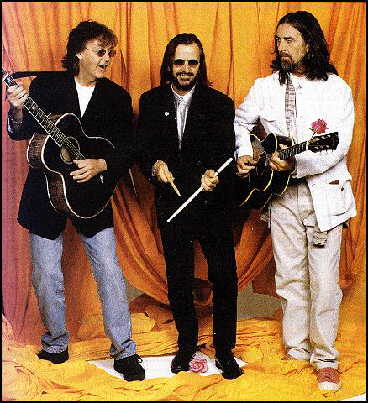
Seeing the above picture nestled in the Newsweek cover story on The Beatles reunion stirred a feeling of both wearied disbelief and a shot of optimistic reality. I remember saying to myself at stage whispered volume, “This is going to happen.”

It’s the fall of 1995 and I am knee-deep in the second wave of Beatlemania getting ready to hit the airwaves. The surviving Beatles have collaborated on an upcoming documentary entitled “The Beatles Anthology.” A three-volume set of accompanying music is on the way with previously unreleased outtakes, alternate versions and two new songs.

As an unabashed Beatles fan, I am near hysterics and anticipation over the notion that the surviving Beatles were reuniting. My recurring dream of a Beatles Reunion was actually going to happen. I did not have to deal with the coy avoidance of the subject from the surviving Beatles anymore. What made this reunion even more poignant was that Paul McCartney, George Harrison and Ringo Starr ignited their collaboration again with John Lennon. They entered the recording studio again with the collective premise that their friend, senselessly murdered by a deranged fan’s torrent of gunfire, had slipped out for cup of tea and entrusted a couple of demos for them to finish.

The reunited Beatles were able to add lyrics, vocals and musical accompaniment to an unfinished demo recording by John Lennon entitled “Free As a Bird.” Another Lennon demo recording was finished and the band added their musical stylings to it. That song was called “Real Love.” Both songs were global smashes and fueled a renaissance for The Beatles at the twilight of the 20th Century.

Considering that the band was able to put aside years of legal and personal battles fueled by a bitter dissolution and enter the studio again with a fresh creative approach is astounding. Adding to the improbability of this scenario was that they were able to reunite with input from a deceased friend. John Lennon’s demos of “Free As a Bird” and “Real Love” were recorded onto tape cassette from a boom box. The tape cassettes of demos possessed all kinds of technical glitches and were crudely created.

On top of this was the heightened reality of fans clamoring for a Beatles reunion since their 1970 disbandment. Each solo member of the dissolved band was faced with the burdening hype of inquiries into a possible reunion. Paul, George and Ringo quietly slipped into the studio and recorded two poignant songs left unfinished by John.

In essence, The Beatles made the impossible possible with their brief reunion.

I remember literally being on the edge of my seat as I watched the countdown clock to The Beatles Reunion appear over the closing credits of Part 1 of ABC’s “The Beatles Anthology.” The video begins for “Free As a Bird” and I am soaring. Hearing Paul’s solo vocal turn during “Free As a Bird” sealed it for me that I was in the middle of a Beatles reunion. It was The Beatles as one would hear them in 1995 and it made so much sense to me.

(You can hear and see the “Free As a Bird” video here: The Beatles Reunion.)

After the witnessing Beatles history, I could not sleep much. It was a school night and a full day of teaching was awaiting me. My 8th Grade Students knew of my Beatles obsession and eagerly awaited my reaction to the new Beatles song. Their genuine and sincere support of my passion led me down the path to integrating a formal lesson based on the music of The Beatles into English Language Arts Class. I had played various songs for The Beatles as background music for various activities but I had never officially taught them.

The reunion of The Beatles compelled me to tune into the courage to introduce their music within a planned lesson. I figured that “She’s Leaving Home” from the “Sgt. Pepper’s Lonely Hearts Club Band” album was a logical place to introduce our upcoming Poetry Unit. What followed was an enriching jaunt into creativity with the class. Students connected with the heart-wrenching story of a teenage runaway as detailed by Lennon & McCartney’s sharp lyrics and string-laded orchestration. Students collaborated in small groups to create an artistic interpretation of the song. I allowed their collective voices to take the song to new creative heights. With my passion for Music and their desire to explore the song further, led me to go off my planned scripted lesson. Student Voice conquered the constraints of the classroom and a new level of expression ensued.  Students produced a range of original artwork, mix tapes, storyboard renderings and newscasts all based on extending their interpretation of the song. I simply stated for students to explore and interpret the song as they wanted to do so without limits.

The template for this activity fueled my inspiration to integrate each moment in the classroom with meaning, relevance and creativity for my students. I never let a day pass in the classroom in which I wanted to tune into their creativity. Some days were successful and others were tremendous failures, but I had the picture of reunited Beatles taped to my desk as reminder that the impossible does become possible.

For our Noble Profession as educators, the impossible is a constant in the schoolhouse. We are tackled with daunting odds, no-win scenarios, and decaying perceptions of our work. Varying labels are affixed to schools in attempt to define a schoolwide achievement grade or solidify a false negative perception. I dream of a perfect glaze to protect us all from our collective schoolwide challenges. There are various movements out there to support and uplift the beautiful work we do in service and support of our kids in the schoolhouse.

Sometimes there are days in which those various positive movements are not enough to sustain me along the journey. Negativity drowns my vision and I allow the echoes of naysayers to resonate. As a principal now, there are greater hurdles to overcome amidst seemingly impossible odds. A steady drumbeat of “These kids can’t!” and “If only we had Program X to save us!” lifts the cacophony to Wagnerian volumes.

Despair is an easy fix.

Then, I gaze at the tattered picture of a Beatles Reunion.

The Impossible became Possible then.

I look back over past blessings and victories in the schoolhouse. I see a classroom transformed into a collaborative hub of creativity by a sad Beatles song. I see a young teacher getting his classroom confidence. I see schools transformed by dreams.

Then, I am “Free As a Bird” like the Beatles Reunion Song.

I flick off the first two letters of the word, “Impossible” and move forward with the schoolhouse.


Touring the Album: Sustaining the Masterpiece in Schoolhouse

“The album would go on tour.”

That was one idea The Beatles had in recording “Sgt. Pepper’s Lonely Hearts Club Band.” Beleaguered by the prison of Beatlemania and touring, the band had quietly ceased live performance. This unanimous decision by The Beatles proved to be the jailbreak needed to embrace freedom in musical innovation.   Recording “Sgt. Pepper” was rife with a hodgepodge of conceptual ideas integrated by The Beatles to savor the innovation they were exploring in the recording studio.

Imagine these statements being tossed around Studio 2 of EMI Recording Studios as The Beatles were dreaming their vision into reality:

  • “Let’s not be The Beatles on this track. We’re the Sgt. Pepper band. What would they sound like?
  • “There will be no pause each song on the record.”
  • “How about comb and tissue paper as a sound effect?”
  • “Those 24 empty bars need to be a giant orgasm of sound.”
  • “Surely, we can add an orchestral arrangement on top of these Indian instruments?”
  • “We can add animal noises at the end of the track.”
  • “Let’s toss on a sound that only dogs can hear.”

No idea was dismissed with derision. Creative risk-taking was the norm.  The band believed in full unity. All four Beatles had to vote in favor for a major decision to progress. Deciding not to tour was akin to career and financial ruin, but The Beatles raised their hands in full favor. The mindset was for their new album to go on tour instead of them.

What a grand and splendid tour for Sgt. Pepper and his Lonely Hearts Club Band! Upon first release in 1967, the “Sgt. Pepper” album sat comfortably at #1 on both the U.S. and U.K. Album Pop Charts. Within the following year, “Sgt. Pepper” earned Grammy Awards for Album of the Year and Best Contemporary Album. Over 10 million copies of the album have been sold and the impact is still resonating with this 50-year tour of Sgt. Pepper. Upon the release of the 50th Anniversary Editions of the “Sgt. Pepper” album, it debuted again at Number 1 on the U.K. Album Chart. In the United States, our military band leader reached #3 on the Hit Parade.

The Pepper Mindset of The Beatles in 1967 has insured that the album will infinitely echo as a timeless and universal work. A masterpiece was forged with collaboration, creativity, and risk-taking serving as the template for the band.

The schoolhouse is the marrow for future masterpieces in the eyes of our children. As educators, we have the same notes to tune into as we approach teaching and learning. Our work as educators is not simply designed to be a mere job. It is a calling to serve as catalyst for future masterpieces from our students. A tall, noble order for all teachers, but if we collectively build a approach that is positive and proactive, then we can sustain The Pepper Mindset in the schoolhouse.

As a principal/lead learner, I used to think that sustainability was a cute buzz word to dazzle a school improvement plan or sprinkle on a deadline-driven report. I do not mean to dismiss the importance of sustainability when it comes to building an instructional framework or physical infrastructure in the schoolhouse. Sustainability is sound leadership and remains a necessity when making decisions in the principal’s role.

If taking on The Pepper Mindset in the schoolhouse, sustainability is viewed in the road ahead for our kids and the impact we have on them. In turn, our students all have the potential to create a lasting impact in our world. Part of our varied role as educators is to be in tune with that as we help them forge a path in embracing the possibilities for the future.

When I walk in any schoolhouse, I often think that somewhere is a student who will solve a global problem or create a positive innovation for future generations. If that student is not in the building, then perhaps, there is a student who will be the mother, father, grandmother or grandfather for that person will do something world-changing.

Sustaining that mindset is found in so many creative and innovative approaches from ditching desks to create a more flexible learning environment. Embedding a time for students to create in a Makerspace or pursue a Passion Project is another way to sustain that masterpiece in the schoolhouse. Giving teachers time and support to collaborate on building innovative and uplifting learning experiences is another key note to hit in building sustainability. Placing all students in the center of  with a unifying positive culture, The Pepper Mindset can prove to be a transformative key for the schoolhouse.

We intentionally sustain the masterpiece in the schoolhouse with the belief that all of our students will make a positive impact. Taking a page from The Pepper Mindset, a schoolhouse has  the ability to have that same resonance as the final 45-second E-major piano chord that signals the end of the “Sgt. Pepper” album with “A Day in the Life.”

“Sgt. Pepper’s Lonely Hearts Club Band” is still on a world tour. The album still inspires and delights as an imaginary band loosely resembling The Beatles performs a fantasy concert. The setlist is filled with all kinds of musical genres and sound pictures. For the past 50 years, a masterpiece has etched its way into our collective soundtrack. We can aspire for that same level of masterpiece in the schoolhouse as educators collaborating, creating and dreaming in service and support of our students.

Ready to join the Sgt. Pepper Band?